Shrivastava and First Tee – Central Florida’s Sadie Goodman earned exemptions into the 2026 PURE Insurance Championship
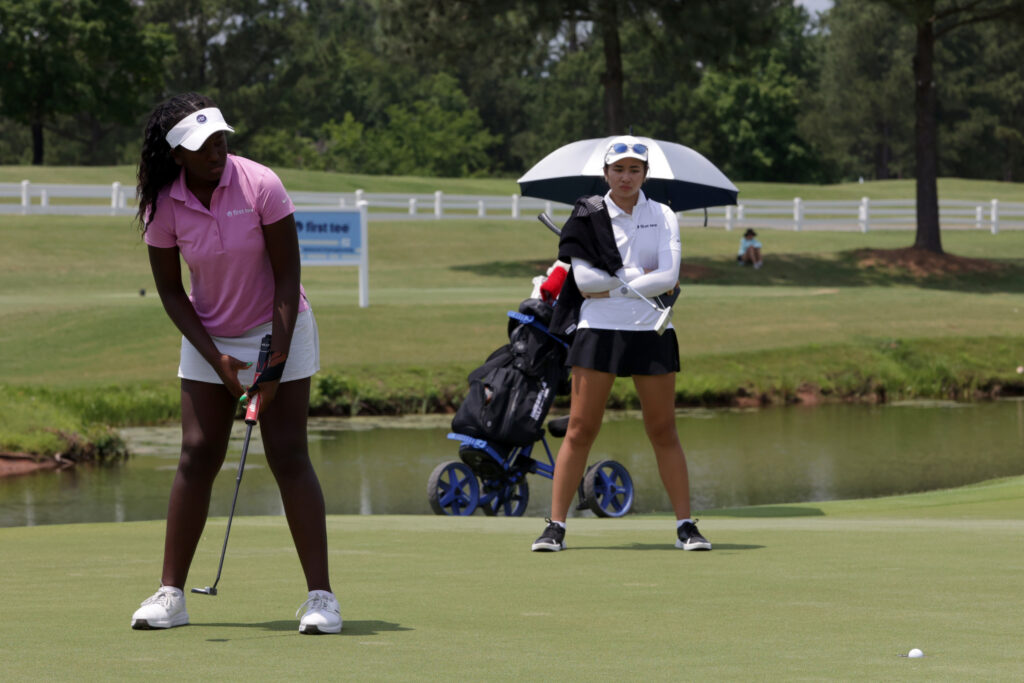
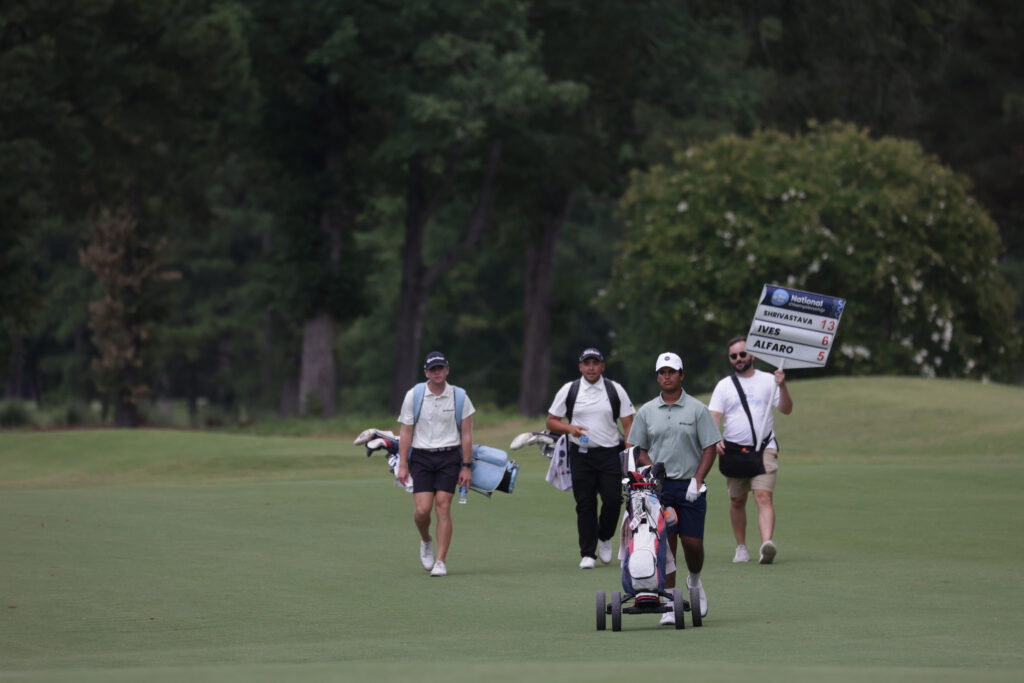
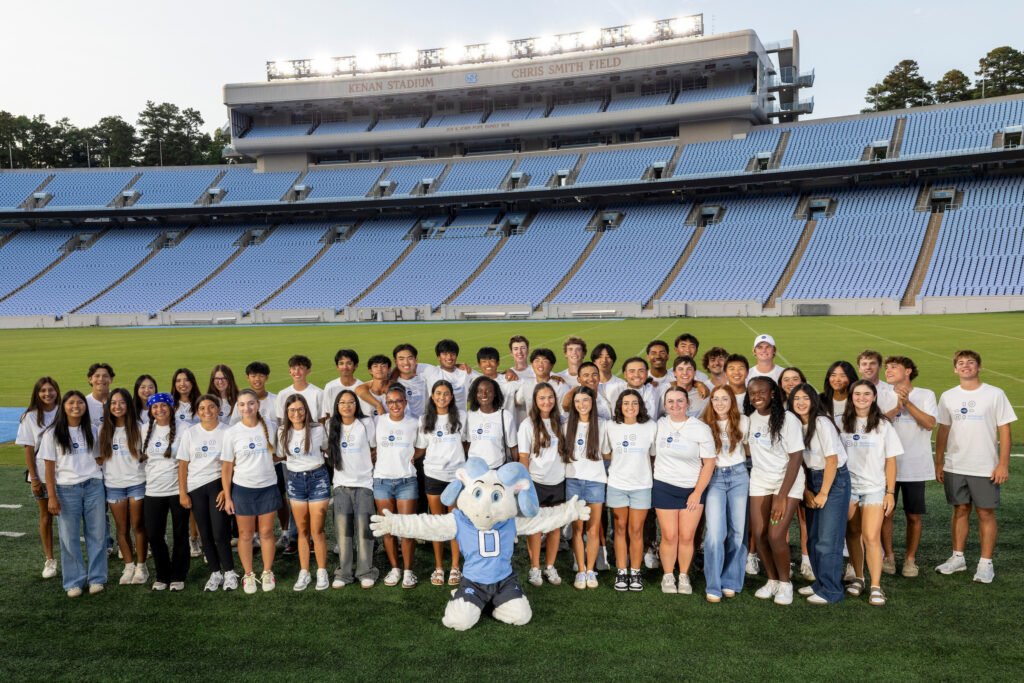
CHAPEL HILL, North Carolina (June 25, 2026) – First Tee has crowned two new national champions: Ashley Shaw of Litchfield Park, Arizona, and Nakul Shrivastava of San Ramon, California, won the girls’ and boys’ divisions respectively. The First Tee National Championship took place at the University of North Carolina’s Finley Golf Club, June 21-25, 2026.
The event brought together First Tee’s elite golfers for an opportunity to showcase how the program has helped them build the confidence, perseverance and skills needed to play at the next level.
Shaw shot 68-67-65 to finish 10-under for the tournament. A rising high school senior, she’s committed to play collegiate golf at the University of Georgia. Currently 67th in the AJGA rankings, she made her LPGA Tour debut at the 2024 Cognizant Founders Cup after earning an exemption into the tournament. Shaw has been involved with First Tee – Phoenix for more than eight years and serves as a volunteer coach and ambassador.
“I’m so excited to be able to get the win,” Shaw said. “For me, staying patient and just knowing I could hit the shots and waiting for the putts to drop was the key, and I just let it happen and I was able to get quite a few birdies this week.”
Shrivastava shot 66-64-67 to finish 13-under for the tournament. He recorded nine birdies in the second round, including six on the back nine. Shrivastava began playing golf with First Tee – Tri-Valley when he was 6. Now a rising high school junior, he has multiple Top 10 AJGA finishes.
“I’m feeling pretty good, very excited that I got to win this, and it was a really good opportunity,” said Shrivastava. “No matter how nervous I got or doubted myself this week, I just remembered confidence is key, and I just persevered through that, and I played pretty well.”
Both winners were awarded the Tattersall Cup in honor of First Tee Trustee Fred Tattersall, who generously supports the event. Photos from the tournament are available here.
Based on their play, Shrivastava and Sadie Goodman of First Tee – Central Florida earned exemptions into the PURE Insurance Championship, a PGA TOUR Champions event that will take place at Pebble Beach Golf Links and Spyglass Hill Golf Course in September. The event pairs golf legends with First Tee juniors for a week of mentorship and competition. Goodman was 4th in the girls’ division, making her the top finisher who has not previously played the PURE Insurance Championship.
“Congratulations to Ashley and Nakul on their outstanding victories at the First Tee National Championship,” said First Tee CEO Greg McLaughlin. “These young people demonstrated exceptional golf skills, sportsmanship and resilience. Thanks to the University of North Carolina for hosting this year’s event and Fred Tattersall for making this event possible.”
The First Tee National Championship is held annually at college golf courses across the nation, providing First Tee participants the opportunity to network with others from around the country. The field included 24 boys and 24 girls, ages 14-18, who were selected based on their golf skills and competitive golf experience. A full list of results is available here.
The championship is part of First Tee’s full slate of national participant opportunities, which is designed to help teens grow while keeping them engaged with the program. In addition to competitive golf opportunities, First Tee headquarters offers leadership programs, a girls empowerment event and a community service workshop.
Chipping In, our donor and supporter newsletter, highlights the ways your contributions are making a difference in the lives of kids through the game of golf.
Contents:
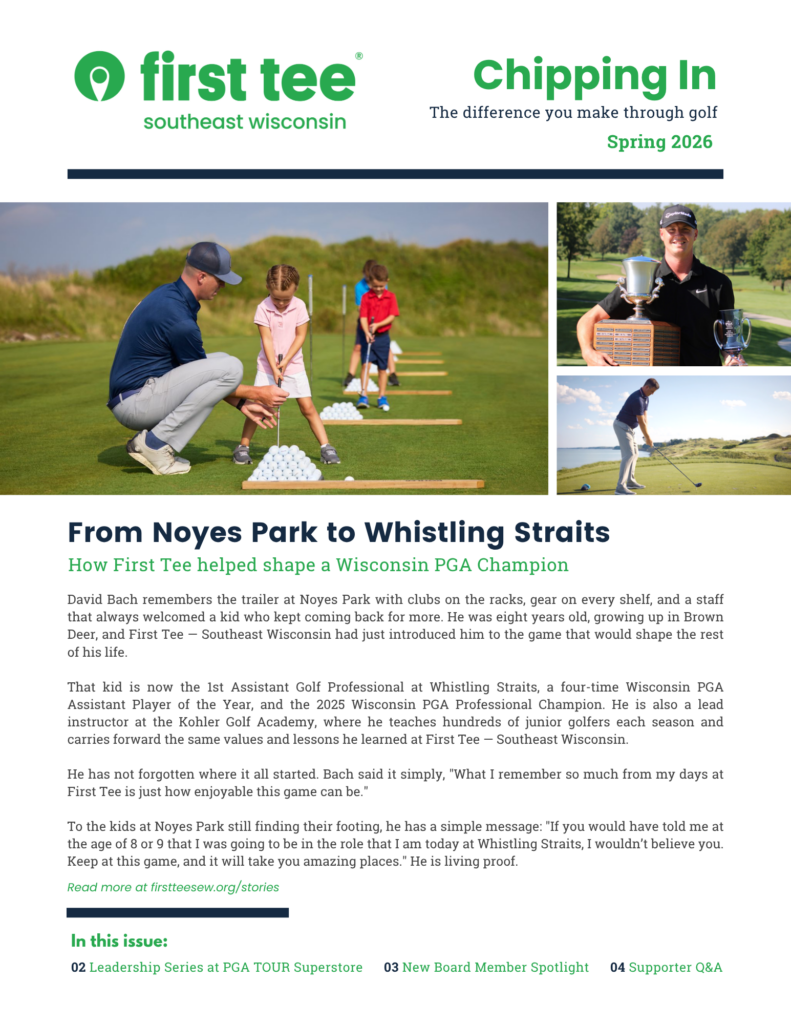
David Bach’s story: from Noyes Park to Whistling Straits
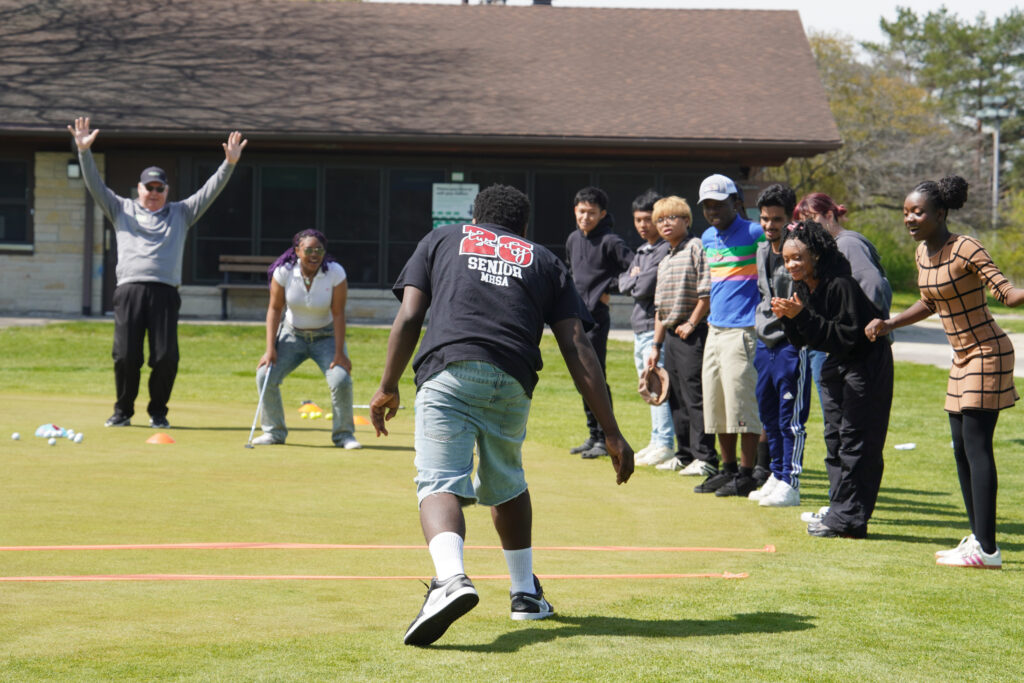
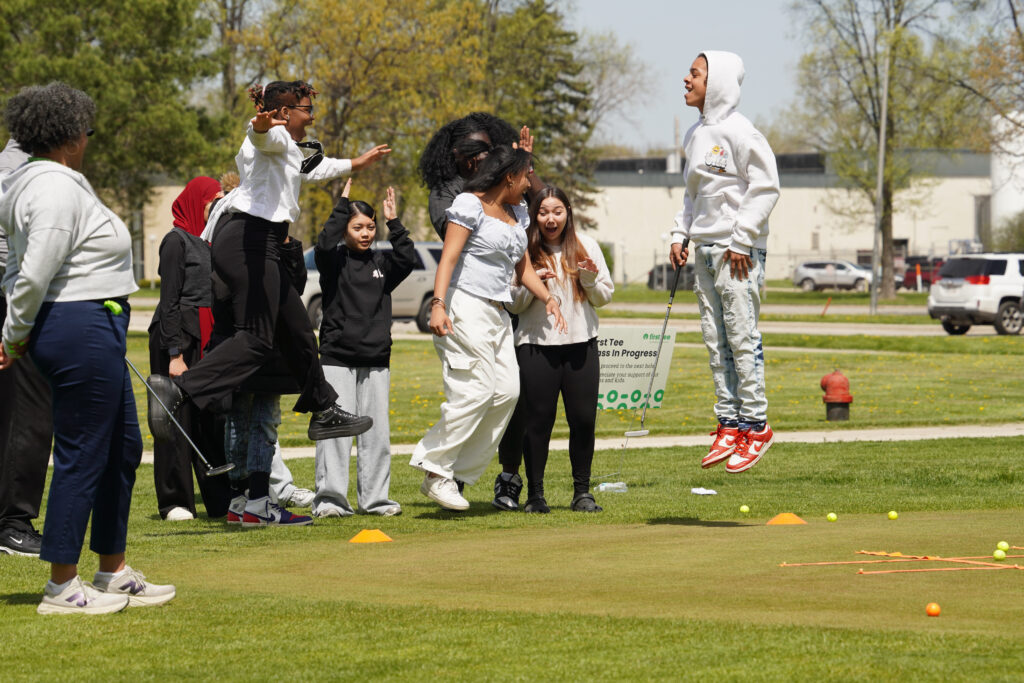
This month, we partnered with Milwaukee High School of the Arts for a two-day golf clinic held right on their campus. Over the course of two days, more than 370 students rotated through hands-on instruction and skills stations, getting real time with clubs and learning the basics of a game many had never tried before. PE teacher Nate Beuttler helped coordinate the unit, and the energy across every session reflected just how hungry students were to engage with something new.
But we wanted to take it a step further.
Fifty students who stood out during the unit earned spots on an incentive field trip to Noyes Park Golf Course, home base for First Tee — Southeast Wisconsin programming. When the bus pulled in, students got right to work. They competed in putting contests, took cuts on the driving range, and then did something many of them had never done before: they walked onto a golf course and played a hole.
For some, it was a first swing on a real fairway. For others, it was the first time they’d ever set foot on a course at all. Watching students experience that, the mix of nerves, laughter, and genuine excitement, is a reminder of why outreach like this matters.
First Tee — Southeast Wisconsin is committed to bringing golf and its lessons to young people across our community, regardless of background or prior experience. Partnerships like the one with Milwaukee High School of the Arts are a direct extension of that mission. When we can bring the game into a school, and then bring students to the game, something real happens.
We’re grateful to MHSA and to every student who showed up ready to try something new. We hope to see some of them back on the course.
How a kid from Brown Deer found his passion at Noyes Park and never stopped chasing the game
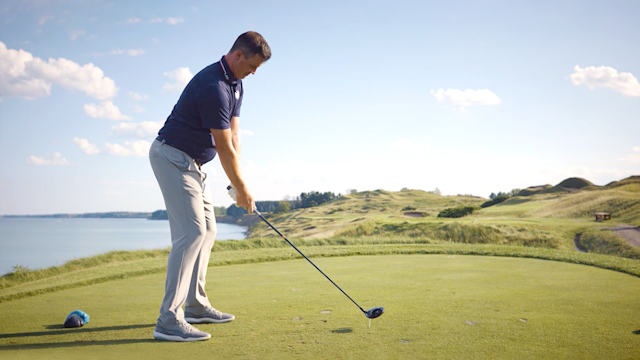
David Bach is sitting in his office at Whistling Straits, looking out at a golf course that has hosted three PGA Championships and the 2021 Ryder Cup. It is one of the most celebrated golf destinations in the world and David has worked here for eight years. He still has to remind himself how he got here.
“I’m sitting here right now looking out at the course through my office,” he said. “This is my office now. It’s the best office in the world.”
It is a long way from where the story started. But the way Bach tells it, the two places are not as far apart as they might seem.
The Trailer at Noyes Park
Bach grew up as the oldest of four siblings in Brown Deer, a few minutes north of Milwaukee. His parents were intentional about keeping their kids active with sports, instruments, summer camps, whatever opened a door. His parents enrolled him in First Tee — Southeast Wisconsin, and he never wanted to leave.
“My parents kept me in the program because I kept going back, year after year after year,” he said. “It was just something I really enjoyed as a kid.”
Noyes Park Golf Course was only a five minute drive away, and Bach treated it like a second home. Morning First Tee camps flowed into afternoons on the par-3 course. But what really kept pulling him back was not the scorecard. It was the trailer.
The First Tee staff kept equipment there: clubs hanging on the walls, gear filling every shelf, the accumulated clutter of a place where golf was always being talked about and worked on. For a kid who described himself as a natural tinkerer, it was magnetic.
“In the golf industry, there are just these areas where you tend to gravitate and talk about golf and just be around golf,” he said. “That trailer was one of my spots.”
He was a regular visitor between rounds and after camp, stopping in to talk shop with First Tee staff and whoever else was around. Years later, he still tells stories about that trailer to the junior instructors he works with at Kohler. It was not just a place. It was where his identity as a golfer began to take shape.
Moments That Never Left
Those years at Noyes left Bach with a handful of memories that have never faded. These memories are the kind that only come from a place where someone invested real time and care into a kid who could not get enough.
There was the day a PGA Tour player came out to Noyes for a clinic. The kids gathered near the chipping green by the trailer, and the visitor, Skip Kendall, a 13-year PGA Tour veteran, was going through some things, answering questions, keeping it light. Then, almost as an aside, he lofted a flop shot directly into a trash can ten yards away. First try.
“It was the craziest thing I’d ever seen,” Bach said. “And it was his first try. That was kind of my first peak into golf at such a high competitive level.”
There was the range ball contest, where one of the instructors drew a mark on a ball, launched it as far down the range as he could, and challenged the junior campers to find it. Bach found it. Standing there in the grass holding that ball, he understood for the first time just how far a skilled adult could hit a golf ball. It sounds like a small thing. It was not.
And there was a coach, a left-handed player who had taught himself to swing right-handed just so he could better demonstrate to his junior students. Bach still tells that story today. Not as a fun fact, but as a lesson about what it looks like when someone is truly committed to the kids in front of them.
“I still tell instructors at our academy about that,” he said. “It has stuck with me all these years.”
These were not accidents. They were the product of coaches who showed up, got creative, and made the game feel like the most exciting thing in the world for a group of kids at a public par-3 course in Milwaukee.
Making It Fun
When Bach reflects on what First Tee gave him, he does not lead with swing mechanics or competitive development. He leads with something that sounds simple but is harder to teach than almost anything else.
“That’s what I remember most from my days at First Tee,” he said. “Just how enjoyable this game can be.”
It is a principle he now carries into every lesson he gives at the Kohler Golf Academy, whether he is working with a junior camper who just picked up a club for the first time or a seasoned golfer from across the country who has been fighting the same slice for twenty years.
“Even for the seasoned vet trying to correct the big slice,” he said, “it’s just: how do we get that game back to being fun?”
The values side of the game is equally present in his instruction. Golf, he tells every student, has no referee. There is no official standing behind you when your ball lands in a divot in the middle of the fairway. You call it yourself.
“It’s a game built on integrity and honesty,” he said. “And you can really relate it to some of the challenges you experience in life. Sometimes you get bad breaks. That’s all part of it. It’s just how you adapt and overcome, in both golf and in life.”
The Moment It Became More Than a Game
At age 12, Bach got his first job as a caddie at Ozaukee Country Club. It was also the first time he had ever set foot on an 18-hole golf course.
What struck him was not the course itself. It was watching the golf professionals move through their day, from the shop to the range to the first tee: running games, giving lessons, chatting with members, doing it all with what looked like effortless joy.
“This doesn’t even seem like a job,” he remembered thinking. “It seems like the most fun thing in the world to possibly do.”
That was the moment. From there, the path began to form.
He played high school golf at Brown Deer, a program that came close to being cut during his time there, but survived, and developed enough to compete in junior events around the Milwaukee area, including the Pepsi Par-3 Tour. He was not a high-profile recruit. He was a kid who loved the game and kept working.
After high school, he enrolled in the Golf Enterprise Management program at the University of Wisconsin-Stout, combining competitive golf with the business side of the industry. His first internship was at Erin Hills during his freshman year. For his second, the extended six-month internship, he had a job offer from Bandon Dunes essentially ready to sign.
Then a friend mentioned Whistling Straits.
It was 2015, and the course was preparing to host its third PGA Championship. He got a call from Whistling Straits and couldn’t pass down the opportunity. The chance to work a major championship would set him apart. He turned down Bandon Dunes and headed to Kohler.
“It was a great choice,” he said simply.
He finished his college career at UW-Stout and in Eau Claire, working at a local course to complete his PGA associate hours. When he graduated, Whistling Straits hired him as an entry-level assistant and he has been there ever since.
The First Time He Heard of Whistling Straits
There is a moment Bach shared that captures the distance he has traveled better than any resume could.
He was a kid, maybe 12 or 13, chipping on the practice green at Brown Deer Park when a group of older golfers nearby started talking about thick rough and how hard it was to escape. He assumed they were talking about a tournament he knew: the Greater Milwaukee Open, which had been held at Brown Deer Park Golf Course.
They were not.
“They said, no, there’s a PGA Championship happening up there, about an hour north of here,” Bach recalled. “And that was Whistling Straits.”
He went home and watched it on television. He had never known the course existed.
Now he arrives there every morning. He walks the same fairways he once watched on TV as a kid sitting in Brown Deer. He looks out at Lake Michigan from his desk. And every once in a while, he has to stop and take it in.
“It’s a pinch-me, surreal moment,” he said. “To be where I started, not even stepping foot on an 18-hole course until I was 12, and now to be here. It’s pretty amazing.”
Eight Years at Kohler, and Counting
Bach’s rise at Whistling Straits has been steady and, by his own description, faster than he expected. In under eight years, he has worked from entry-level assistant to 1st Assistant Golf Professional, a role that puts him in one of the most storied golf operations in the country.
A significant part of that role is leading junior programming. As the head instructor for the Kohler Golf Academy, Bach runs junior camps, gives individual instruction to players at every level, and has coached a PGA Jr. League team for five consecutive seasons. He also served as the on-site lead for the PGA Works Youth Day at Whistling Straits, organizing an event that brought Milwaukee-area junior golfers to Kohler for a day.
He does not treat youth instruction as a side element of the job. He treats it as a priority.
“There are going to be kids that are sent there by their parents,” he said. “But there are the kids that are really invested in it, that have that excitement, and it resonates with me because it’s that same excitement that I have.”
He thinks often about what First Tee gave him, and what it means to be on the other side of that equation now. The answer keeps coming back to the same thing it always has.
“It’s my way of giving back to the game that has given so much to me,” he said. “Just trying to help inspire kids to explore this game, not only competitively, but the business side of it as well.”
A Player at the Top of His Game
While building his career in instruction and operations, Bach has also become one of the top competitive players in the Wisconsin PGA Section.
He won his first WPGA Assistant Player of the Year award in 2019, just his second year as a PGA associate. He has now claimed that award four times, joining a short list of Wisconsin PGA assistants to win it three or more times. Along the way, he added back-to-back Wisconsin State Assistant Professionals Championships in 2022 and 2023, two Wisconsin State Assistant Match Play Championships, and the 2024 WPGA Member Match Play Championship.
Then came September 2025.
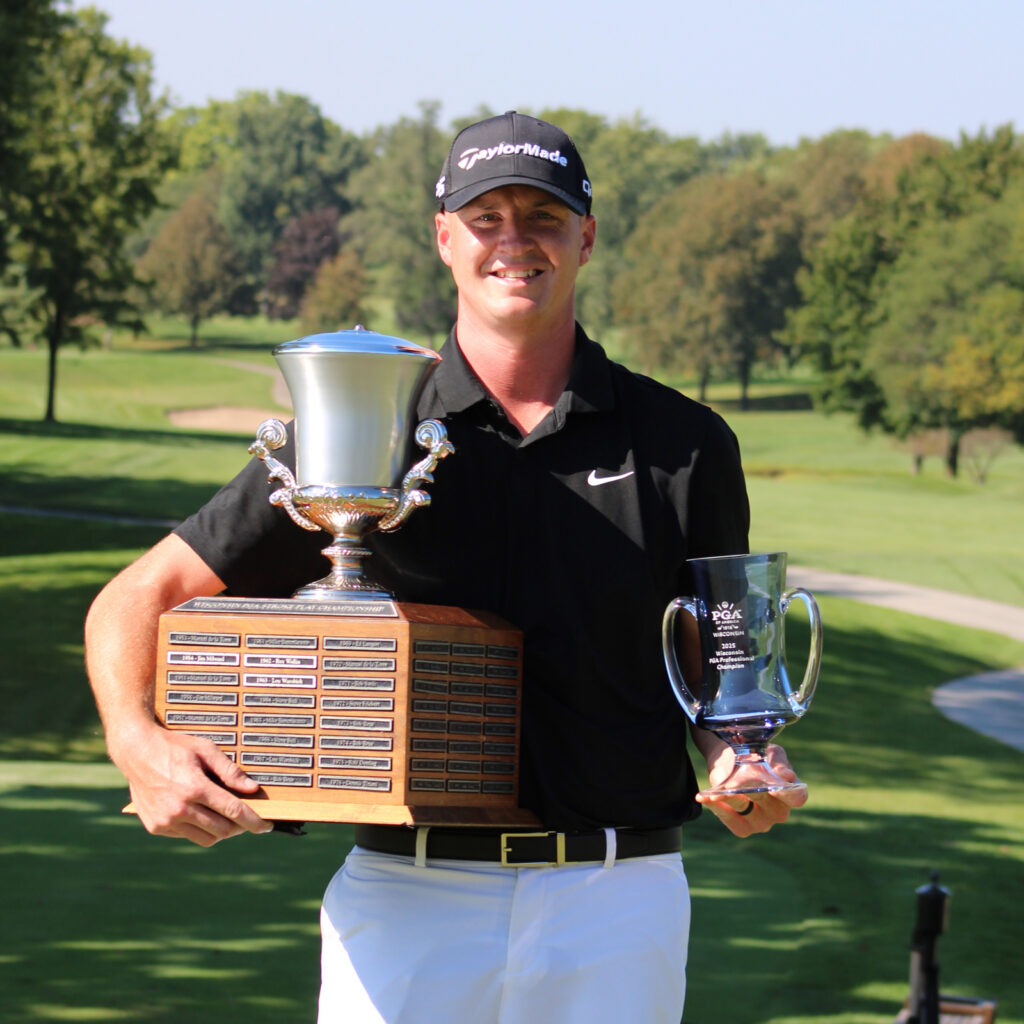
At Ozaukee Country Club, the same club where he caddied at age 12 and got his first glimpse of what a career in golf could look like, Bach shot back-to-back rounds of 66 to win the Wisconsin PGA Professional Championship by five strokes. The victory earned him a berth in the national PGA Professional Championship and established him as one of the premier playing professionals in the state.
He described his competitive philosophy this way: “It’s this constant, unattainable pursuit of perfection. That’s what we’re all chasing. No matter if you’re Scottie Scheffler or a club pro, we’re never going to achieve that, but we’re going to continue to chase it.”
The mental side of the game has become his real focus in recent years, something he is equally intentional about passing on to the competitive junior players he coaches at Kohler.
“As I’ve gotten older, it’s much more about managing yourself around the course, particularly in big tournaments, than the physical side,” he said. “There have been so many repetitions on the physical side. Now it’s about how you manage the stress.”
His advice to the kids chasing college golf opportunities through his instruction, “Not going out there trying to make birdies. Just doing your thing, and hopefully letting the scores come.”
What He Would Tell a Kid at Noyes
Bach does not have a complicated message for the kids going through First Tee — Southeast Wisconsin right now at Noyes Park. He has the message of someone who lived it.
“Keep at this game, and you’ll never know where it can take you,” he said. “You could have told me at the age of 8 or 10 that I was going to be in the role I’m in here and I wouldn’t believe you.”
He believes programs like First Tee, rooted in public spaces, built around values, committed to kids who might not have any other entry point into the game, are essential to producing stories like his. Not because every participant is going to win a state championship or work at a world-class resort, but because the lessons travel, and they last.
“It’s a game that can provide so much more than just a score or physical activity,” he said. “It teaches honesty, integrity, and so many different values that kids can apply to the rest of their lives and how they carry themselves as people. I don’t think any other game does that quite to the same level.”
From a trailer full of clubs at a public par-3 in Milwaukee to the best office in the world on the shores of Lake Michigan: David Bach is proof of what is possible when someone invests in a kid who can’t get enough of the game.
First Tee — Southeast Wisconsin programming takes place at Noyes Park Golf Course in Milwaukee. To support the work that creates stories like David’s, visit firstteesew.org/donate.
First Tee Week 2026 is in the books, and we are still feeling the energy from everything that happened May 23-30. This year’s theme, “Dear Coach,” gave us an opportunity to do something we do not do enough: stop and say thank you to the coaches who make this program possible.
Here is a look at everything we were up to.
The Dear Coach Campaign
At the center of this year’s First Tee Week was our Dear Coach campaign. We mailed cardstock signs to select families across our program locations and invited them to record short video messages for their coaches for a chance to share, in their own words, what those relationships have meant to them.
The videos families sent back were moving. Throughout the week, we shared them on social media, and the response from our community was everything we hoped it would be. These coaches pour so much of themselves into this program, and it was meaningful to give participants and families a platform to honor that.
Media Features
First Tee Week also brought some great opportunities to share our story with the broader Wisconsin golf community.
David Cohn, CEO, joined Stephen Watson and Gabe Neitzel on the On the Tee podcast to talk about First Tee Week and the impact our coaches have on young people in Southeast Wisconsin. Listen to the episode here.
Tom Gerke, Program Director, and Wyatt O’Loughlin, Operations Coordinator, also stopped by the Tory Lowe Show to talk about the week, our summer programming, and how families can get connected with First Tee — Southeast Wisconsin. Listen to the episode here.
Wyatt O’Loughlin also joined Garbedian on Golf to talk about First Tee Week and what the program means to the Southeast Wisconsin community. Listen to the episode here.
We were featured in a wisconsin.golf article highlighting the real impact that coaches have on program participants. Read the full article here to learn more about how our community builds game changers.
We are grateful for each of these opportunities to get our mission in front of new audiences.
Brewers Game Outing
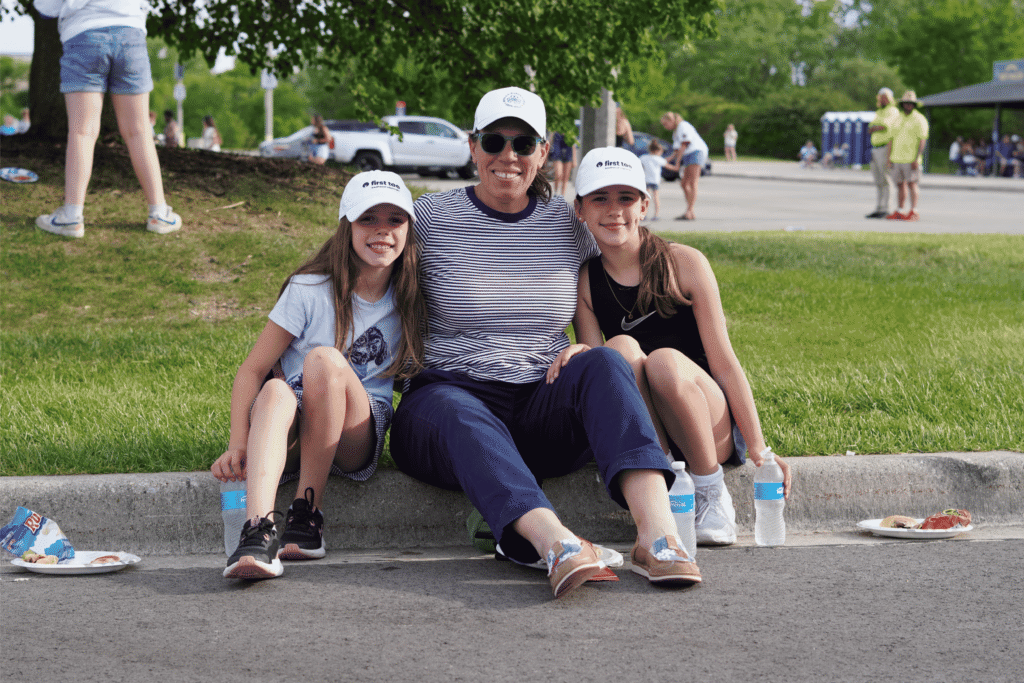
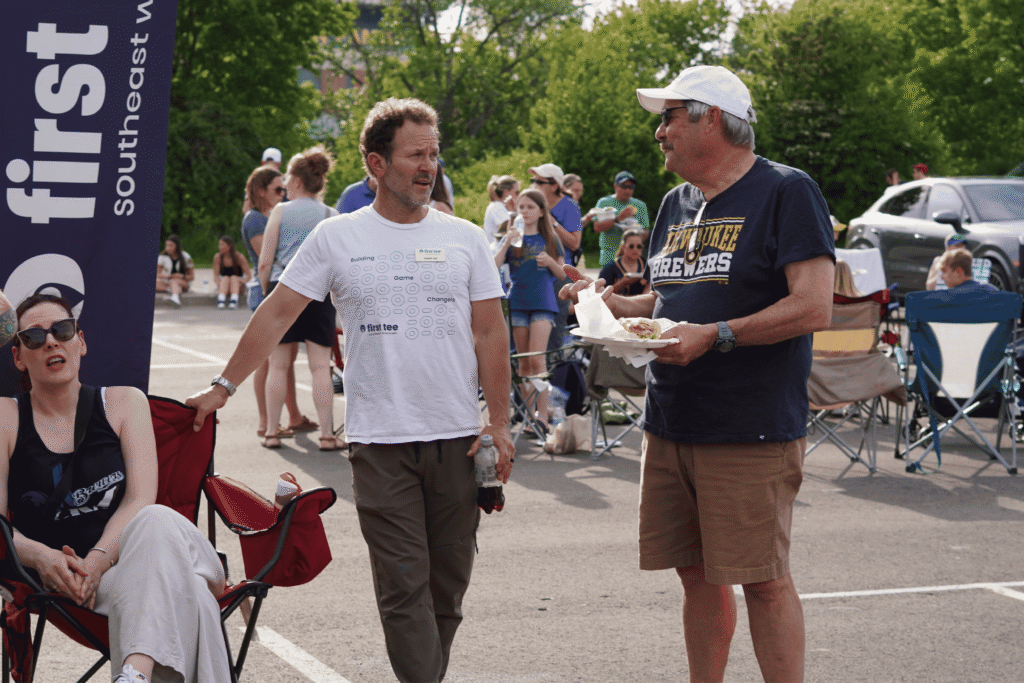
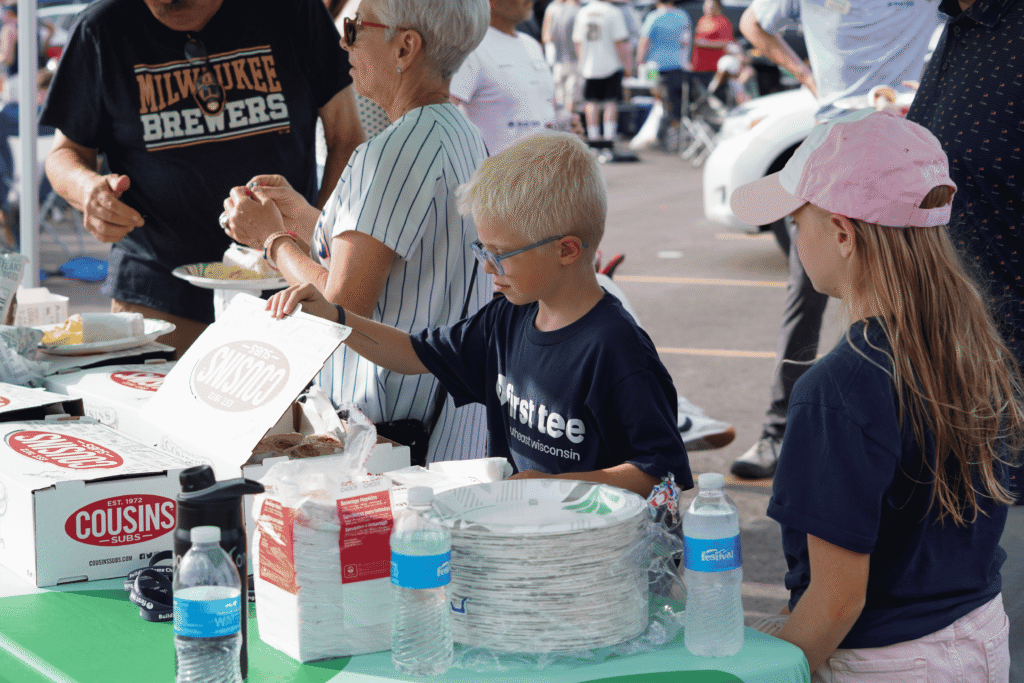
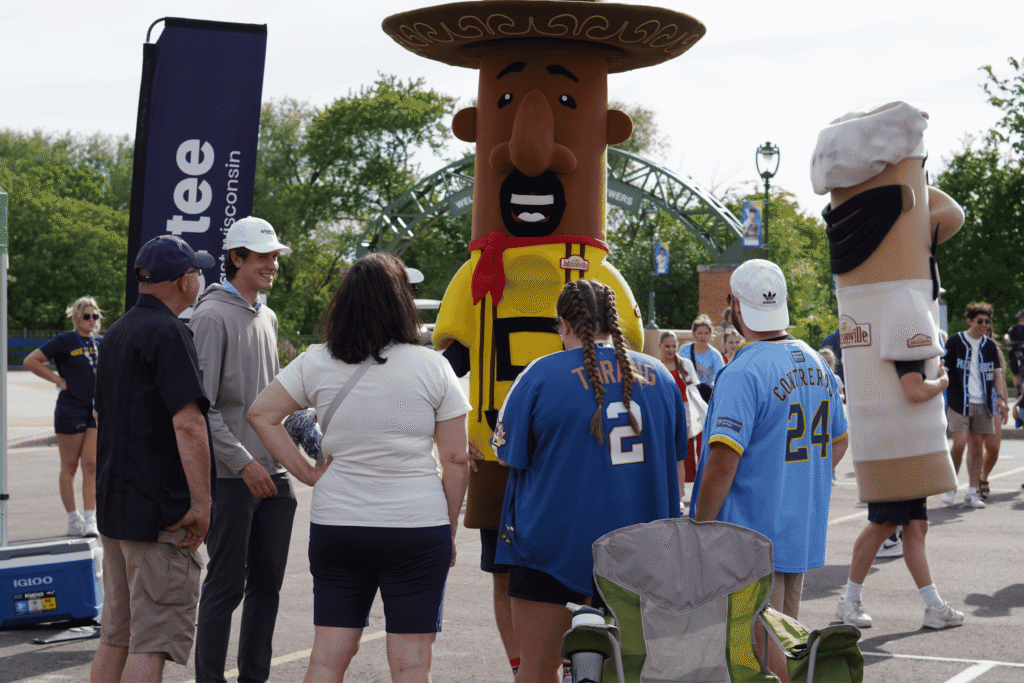
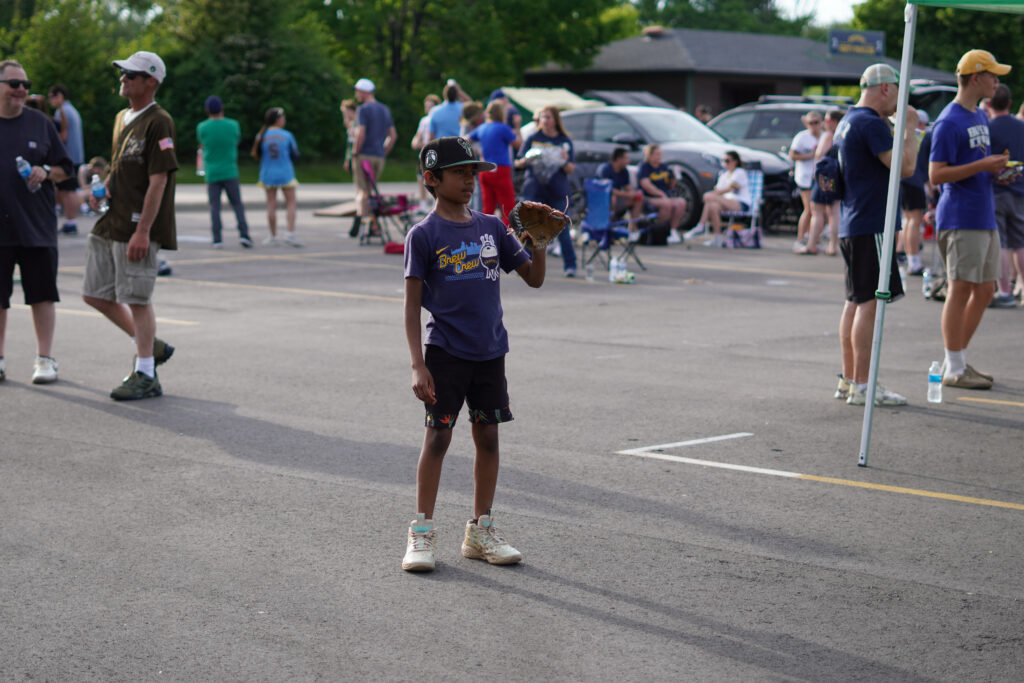
To wrap up the week, we took our families to American Family Field for a Milwaukee Brewers game. The evening started with a tailgate and ended with a lot of smiles. It was the perfect chance to bring coaches, families, and participants together outside of the program setting and just enjoy being around each other.
Thank you to everyone who participated, shared, showed up, and cheered us on during First Tee Week 2026. This program exists because of this community, and weeks like this one are a reminder of that.
In addition to financial support, First Tee Scholars receive mentorship and professional development opportunities
PONTE VEDRA BEACH, Fla. (June 2, 2026) – Youth development organization First Tee is proud to announce its incoming class of Scholars, welcoming 23 exceptional young leaders into the First Tee College Scholarship Program. Selected from chapters across the country, the incoming Scholars represent the organization’s highest ideals, demonstrating outstanding commitment to academics, community service and the values they developed through years of First Tee participation.
Young men and women from 20 First Tee chapters comprise this year’s Scholar class, including three collegiate golfers and four first-generation college students. They will arrive at universities across the country this fall, studying subjects including engineering, sports management, business, biology and more. On average, incoming Scholars have spent an average of 9.3 years with First Tee and boast a weighted GPA of 4.3.
“The exceptional participants who make up this year’s Scholar class represent the very best of what First Tee stands for: a relentless commitment to excellence in the classroom, in their communities and to their character,” said First Tee CEO Greg McLaughlin. “The First Tee College Scholarship Program exists to ensure that these exceptional young leaders have the resources they need to reach their full potential, and we are grateful to the donors and corporate partners who make this program possible.”
New Scholars will be invited to attend a Pre-College Retreat in Ponte Vedra Beach this summer, where they will meet their peers, network with professionals and attend workshops to help them prepare for their first semester of college.
Launched in 2020, the First Tee College Scholarship Program provides selected alumni with financial support, mentorship and professional development opportunities designed to help them succeed in college and beyond. Scholars participate in workshops, gain access to an expansive professional network, and receive ongoing guidance as they navigate their college journeys.
Candidates are selected based on academic achievement, dedication to service and commitment to their First Tee chapter and community. The program reflects First Tee’s broader mission of using golf to teach young people life skills that develop character, extending well beyond the course.
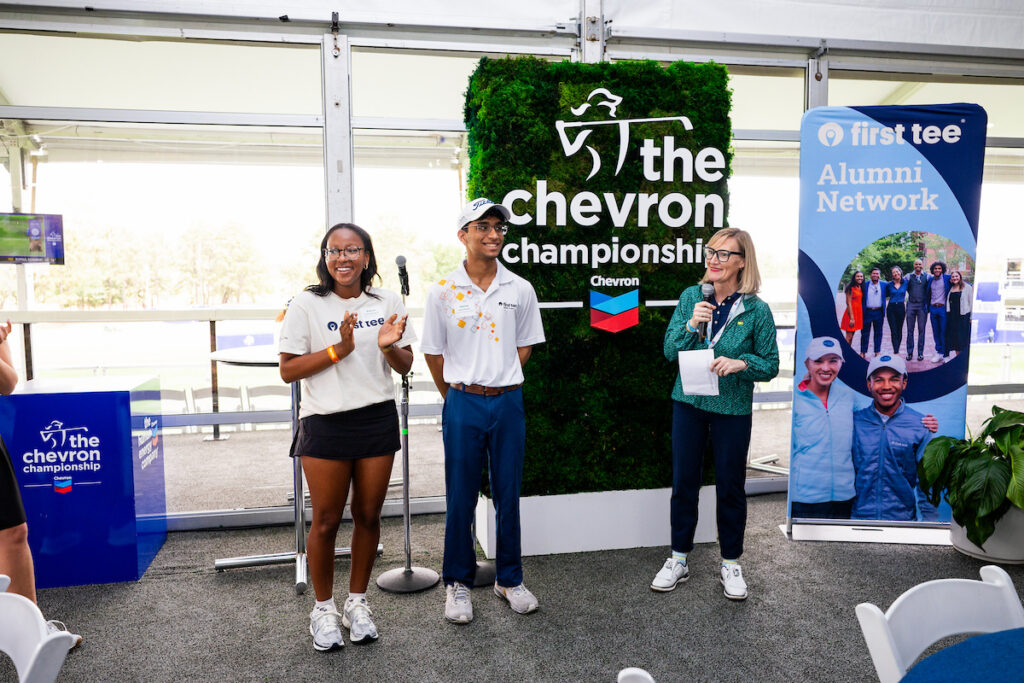
In April, leaders from Chevron, a supporter of the First Tee College Scholarship program, surprised Carlie Matengula (left) and Aarya Shewale (center) with invitations to the program during The Chevron Championship.
The full list of incoming First Tee College Scholars is below.
Name
Chapter
University
Major
Riley Albright
Central Ohio
Ohio State University
Sports Management
Natalie Chen
Silicon Valley
Stanford University
Business
Noelle Gagnon
New Hampshire
Connecticut College
International Relations
Lilyanna Hathaway
Colorado Rocky Mountains
Colorado Mesa University
Marketing
Justin Hsieh
Raritan Valley
Rutgers University
Aerospace Engineering
Nick Huang
Greater Seattle
Northwestern University
Electrical Engineering
Riley Jamison
Tennessee
Palm Beach Atlantic University
Communications
Joshua Ju
Tennessee
Vanderbilt University
Pre-Medicine
Carlie Matengula
Greater Austin
Howard University
Political Science
Jasmine McGhee
Greater Chicago
Cornell University
Psychology
Colby Palacio
Raritan Valley
Rutgers University
Accounting
Ishani Patel
Metropolitan Oklahoma City
University of Oklahoma
Biomedical Engineering
Kailyn Peterson
Idaho
Boise State University
Nursing
Jack Polansky
Greater San Antonio
Berry College
Environmental Science
Lula Rivera
Greater Wilmington
North Carolina State University
Engineering
Alexis Roth
Greater Charlotte
University of South Carolina
Sports Management
Isabella Russo
Florida Gold Coast
University of Central Florida
Engineering
Aarya Shewale
Greater Houston
Texas A&M University
Aerospace Engineering
Sydney Socha
Toledo
University of North Florida
Business
Anabella Van Cotthem
San Diego
University of California, Irvine
Biology
Weston Wakefield
Central Arkansas
Southern Nazarene University
Kinesiology
Ashton Washington
Tampa Bay
Florida A&M University
Finance
Bailey Webb
Colorado Rocky Mountains
Ohio State University
International Business
Since its inception, 120 First Tee Scholars have benefited from this comprehensive support system. The First Tee College Scholarship Program is made possible through the generosity of individual supporters and corporate partners. Learn more about supporting First Tee.
This First Tee Week, we’re celebrating game-changing coaches like Libby Chamberlin.
The youngest of three siblings, Libby watched her older brother and sister take classes at First Tee – Greater Cincinnati & Northern Kentucky for as long as she can remember. She wanted in. The moment she turned 7 and was old enough to join, she was ready.
“I was ecstatic,” she said.
Her siblings eventually found passions elsewhere, but Libby kept coming back, through middle school, high school and eventually into a coaching role she’s now held for six years. What started as a little sister tagging along has become a career shaped by First Tee’s values and the coaches who modeled them.
Ask Libby what kept her coming back year after year before she even fell in love with golf, and she’ll tell you: the coaches.
Tom and Mellisa Briner helped found First Tee – Greater Cincinnati & Northern Kentucky and helped shape Libby’s path. Swing instructor Bill Donaldson has been a constant presence throughout both her years as a participant and now as a fellow coach.
“I want to give kids the same great experience with the program that I had,” she said.
Game-planning for the future with Ace
During her time as a participant, Libby was selected for two First Tee participant events: Game Changers Academy and Drive Your Future Academy. At both, she connected with participants from across the country and first learned about Ace.
The seed was planted.
In the spring of her junior year, Libby and her friend Abigail Laake decided to go for it together. They became the first participants at their chapter to complete Ace, meeting regularly with then-executive director Alicia Lawrence to work through it side by side.
Libby remembers those meetings vividly — not just for the work, but for what they meant during a stressful stretch of senior year.
“It was so helpful to have a mentor to consistently check in with,” she said. “I loved the way that the Ace experience encouraged me to create a game plan for life after graduation in all aspects of my life, like exploring ways to invest in my community and deciding how golf will fit into my life after I stop playing on a team. It provided me with an opportunity to explore who I am, what I want and what my long-term goals are.”
A coach is born
It was through volunteering in First Tee classes and serving as a role model for younger participants that Libby discovered her love for coaching.
Alicia encouraged her to pursue it, and six years later, she’s still at it. Coaching part-time through college deepened her passion for working with young people and pointed her toward a career in youth development and education.
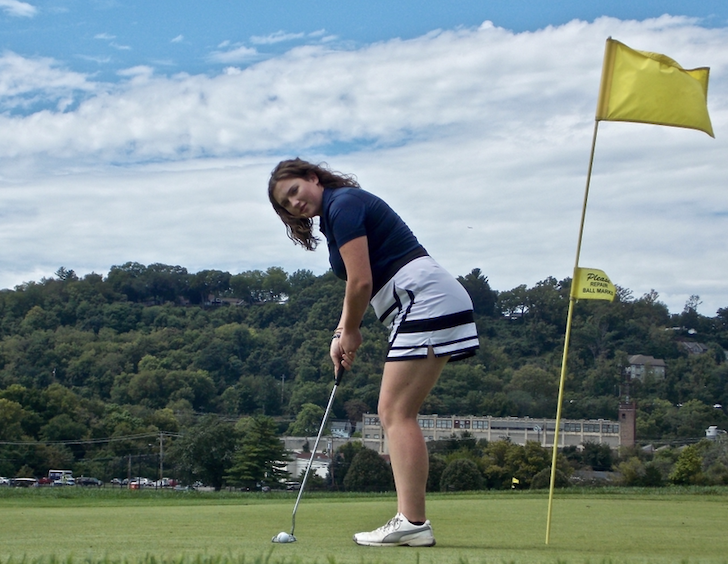
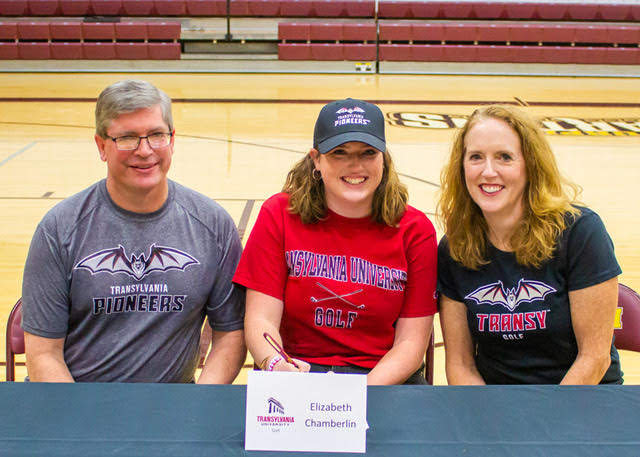
She graduated from Transylvania University where she played golf while studying education and social change, developing a particular passion for literacy and learning outside traditional classroom settings. She’s currently pursuing a master’s degree in library sciences with a focus on public libraries and youth services.
The thread running through all of it traces back her First Tee chapter and the coaches who showed up for her. Now a Level 3 coach herself, Libby is certified to teach the Ace curriculum.
For any First Tee alumni thinking about getting involved again, Libby has a simple message: Reach out to your local chapter.
“I know it can be hard to meet people post-grad,” she says. “Helping out with a First Tee class is a great way to dip your toes back in while also giving back to the community — and it’s a fun way to get back into golf yourself.”
According to research from The Harris Poll and First Tee, 90% of parents believe coaches are the “unsung” heroes of youth development. But most parents also agree there’s a shortage of high-caliber coaches today. That’s why we’re honoring impactful coaches during First Tee Week, May 23-30, 2026. Learn more.
First Tee Week (May 23-30) is a nationwide celebration of everything the First Tee stands for: the game, the mission, and the coaches and instructors who show up every day to build character in young people. Here in Southeast Wisconsin, we’re marking the week with a Registration Rally, a celebration of our coaches, and an open invitation to the community to get involved.
Register This Week and Support the Mission
Summer programs are open and registration is now live at firstteesoutheastwisconsin.org/register. During First Tee Week, every new registration triggers a $5 donation from an anonymous donor to First Tee — Southeast Wisconsin, and every new registrant is automatically entered to win a First Tee Week Prize Package.
Programs are available for young people ages 4-18 at sites across Southeast Wisconsin, including Noyes Park, Brown Deer Park, Currie Park, and Dretzka Park in Milwaukee, Rolling Meadows in Fond du Lac, and Washington Park in Kenosha.
Know a kid who belongs on the course this summer? Now is the time to sign them up.
This Year’s Theme: Dear Coach
The 2026 First Tee Week theme is “Dear Coach,” and it’s a fitting one. The coaches and instructors of First Tee — Southeast Wisconsin show up season after season to do something that goes far beyond teaching golf. They build character. They model resilience. They help young people develop the confidence and values they’ll carry for the rest of their lives.
Their dedication is a big reason we served 45,514 young people through First Tee programs last year, and why on-course participation nearly doubled between 2018 and 2025. That kind of growth doesn’t happen without people who genuinely care about kids.
If a First Tee coach has made a difference for your family, this is a great week to let them know. Visit firstteesoutheastwisconsin.org/dearcoach to learn more about the Dear Coach theme.
Get Involved
Register at firstteesoutheastwisconsin.org/register. Share this post with a family who should know about us. And if you’d like to support the work beyond registration, visit our website to learn about giving, volunteering, and partnership opportunities.
First Tee — Southeast Wisconsin is building game changers. We’re glad you’re part of it.
Most golfers have a bag of used balls sitting in the garage, a sleeve from last season, a bucket of mismatched finds from the rough. Now there’s an easy way to turn that clutter into something meaningful.
First Tee — Southeast Wisconsin has partnered with BreakfastBalls.Golf as our Official Used Golf Ball Recycling Partner, giving donated golf balls a second life while generating proceeds that come back to support youth programming right here in Southeast Wisconsin.
How it works is simple. Drop off your used golf balls at any of our equipment donation locations. Our program participants get first access to what they need, so every kid we serve is equipped to play. Surplus inventory is then purchased in bulk by BreakfastBalls.Golf, with proceeds coming back to support our youth programming across Southeast Wisconsin.
And if you’re in the market for quality used golf balls yourself, use promo code FTSEW10 at checkout on BreakfastBalls.Golf for 10% off your purchase.
To donate used golf balls, find a drop-off location near you here or learn more about BreakfastBalls.Golf here.
Big smiles, big swings, and an even bigger reminder of why we do this work.
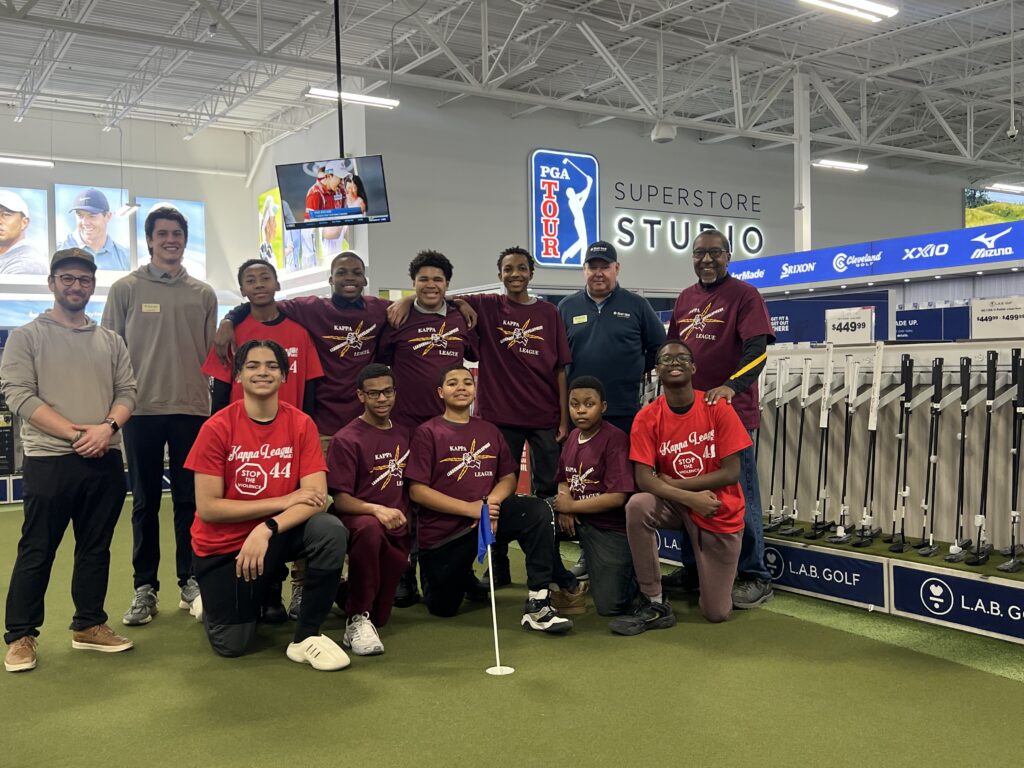
BROOKFIELD (Feb. 25, 2026) – At First Tee — Southeast Wisconsin, we believe golf creates a powerful environment where youth in our community can learn and grow. Recently, we had the opportunity to bring that belief to life through a special junior golf event in partnership with Kappa League at PGA Tour Superstore.
From the moment the kids arrived, the afternoon was designed to be an experience. It started with something we think matters just as much as any swing tip: a conversation about growth. Participants dove into a lesson on growing through challenge, the idea that the obstacles we face on and off the course are often our greatest teachers. It set the tone for everything that followed.
Before picking up a club, the group got a full tour of PGA Tour Superstore. For many of the kids, it was their first time exploring a space dedicated entirely to the game, from equipment to apparel to training tools. Seeing golf through that lens has a way of making the sport feel more accessible, more exciting, and more like something that belongs to them.
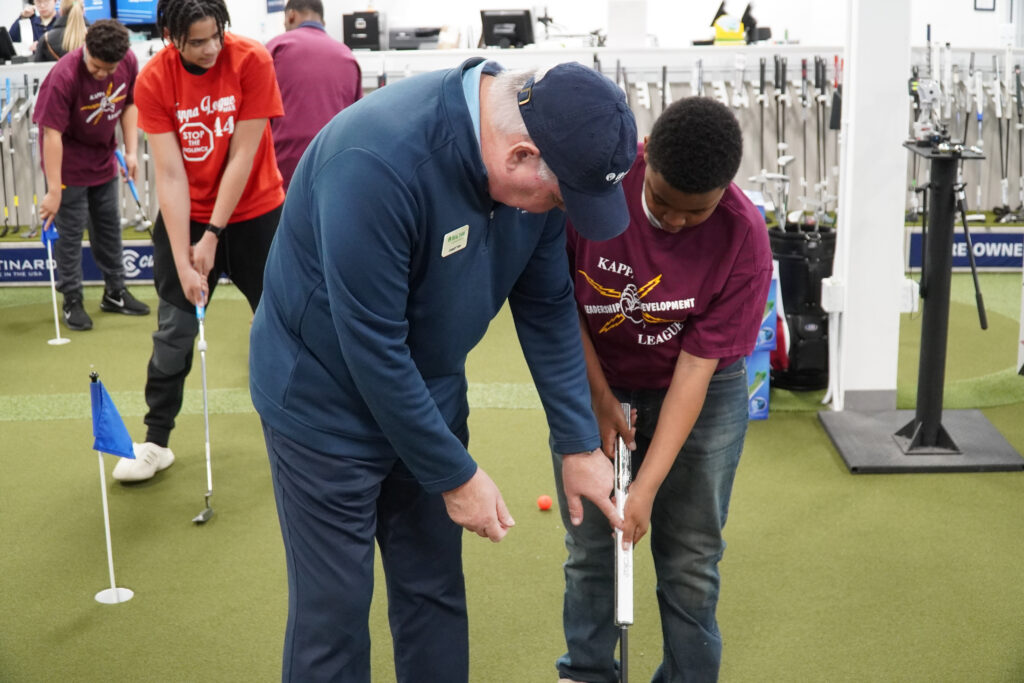
Coach Tom breaking down the fundamentals with a participant on the putting green at PGA Tour Superstore.
Then it was time to play. Participants worked on their putting on the store’s putting green, learning the focus and feel that the short game demands. From there, they moved to the simulator for full swings, which created a high-energy experience that had everyone locked in and having fun. The afternoon wrapped up the right way: with pizza and good energy in the room. Moments like that, where young people are laughing, talking about their shots, and just being together, are a reminder of why community-based programming matters.
This event is a glimpse of what we are continuing to build at First Tee — Southeast Wisconsin. We are always looking for new ways to bring young people into the game and connect them with partners who share our vision.
If you’ve spent any time around a golf course in Wisconsin, you already know something the numbers are now confirming: this sport runs deep in this state. It’s in the municipal layouts tucked into neighborhood parks, the historic courses where generations of families have played, the tournaments that draw visitors from across the country, and the charity scrambles that raise millions for local causes every year.
This week, the Wisconsin Golf Alliance released a comprehensive statewide economic impact study, and the findings are striking. Wisconsin golf generates $6.44 billion in total economic impact, supports 56,595 jobs, contributes $2 billion in wages, and returns $288 million in state and local taxes. Those numbers represent real livelihoods and real community investment across every corner of the state.
For context, the study notes that Wisconsin’s golf industry outpaces the combined economic contributions of craft beer, wine, local spirits, and Packers home games, sectors that most people would immediately associate with Wisconsin’s identity. Golf belongs in that conversation too, and this study makes that case clearly.
What the Numbers Mean for Youth Development
At First Tee — Southeast Wisconsin, we spend a lot of time talking about what golf does for young people. We know, from the kids we work with every day, that the game teaches patience, accountability, respect, and resilience in ways that carry far beyond the course. But the economic impact study also shows what golf does for young people in a broader, structural sense.
According to the study, 97% of surveyed Wisconsin golf facilities support at least one youth development program. That includes junior golf, scholastic golf, and First Tee programs across the state. More than 30 Wisconsin courses participate in Youth on Course through the Wisconsin State Golf Association, offering rounds for $5 or less to junior golfers statewide.
These aren’t small gestures. They represent a coordinated, industry-wide commitment to keeping the game accessible and to investing in the next generation of players and community members.
Charitable Giving at Scale
One of the most remarkable data points in the study is this: Wisconsin golf facilities hosted more than 9,000 charitable events in 2023, raising $166 million for local nonprofits. Every single surveyed facility hosted at least one charitable event. The golf course has long served as a venue for community fundraising, and that function is now documented at a scale most people probably hadn’t considered.
Those dollars flow to youth development organizations, conservation groups, healthcare nonprofits, schools, veterans initiatives, and many others. First Tee — Southeast Wisconsin is proud to be among the beneficiaries of golf’s charitable culture in this state, and we take seriously our responsibility to put those resources to work for young people.
A Sport That Is Genuinely Accessible
One of the most common barriers people cite when it comes to golf is cost. The study offers some helpful context: 55% of Wisconsin’s public golf facilities charge under $50 per round, and 87% of all facilities are open to the public. The picture of golf as an elite or exclusionary sport does not match the reality of how most people in Wisconsin actually experience the game.
Our programs at First Tee — Southeast Wisconsin are designed with accessibility at their core. Scholarships are available, and we partner to operate programs at Noyes Park, Lake Park, Brown Deer Park, Dretzka Park, Currie Park, Rolling Meadows, and Washington Park, all public courses that are woven into the fabric of their communities. We want every young person in Southeast Wisconsin to have a genuine pathway into the game.
What This Means for Us
We are a small organization with a big mission. We use golf to teach life skills and character development to young people ages 4 to 18. We couldn’t do that work without the golf community around us, and this study is a reminder of just how substantial that community is.
The $6.44 billion figure reflects the collective investment of course operators, equipment retailers, tourism businesses, tournament organizers, and charitable donors. It reflects the volunteers who show up to coach, the businesses that sponsor events, and the families who prioritize the game as part of how they spend time together. We are grateful to be part of that ecosystem.
If you’d like to support First Tee — Southeast Wisconsin, or if you’re interested in learning more about our programs, we’d love to hear from you. And if you haven’t had a chance to read the Wisconsin Golf Economic Impact Report, it’s worth your time. The full executive summary is available through the Wisconsin Golf Alliance.
Some people find golf. Golf found Coach Shayna before she could even see over the top of the flagstick. Growing up in Unionville, Missouri, Shayna was just 3 when her grandparents cut down a putter and packed her into their three-wheel Harley-Davidson golf cart, heading to their nine-hole course with sand greens.
“My grandparents were intentional about teaching me the game the right way,” she said. “They made sure I understood both the mechanics and the integrity behind golf.”
By 11, Coach Shayna was playing on real grass greens for the first time. By 13, she shot a 79 at the Timber Ridge Junior Golf Tournament in Memphis, Missouri — the best score of the day — with her Grandpa Gary, affectionately known as “Schoonie,” walking every hole beside her.
Blazing her own trail
Golf wasn’t always easy to access, especially for a girl growing up in rural America in that era. There were no First Tee programs nearby, no girls’ golf team at her school and no shortage of moments that tested her resolve. When she was excluded from a Father’s Day tournament because organizers believed there should be “no girls,” she didn’t walk away from the game. She found another way in.
Shayna earned a spot on her high school boys’ varsity golf team — and held her own in the top five all four years, competing weekly for the number one position. Golf was just one chapter in a standout athletic career that earned her 16 varsity letters across golf, softball, basketball and track. Her softball team was later inducted into the Missouri State Hall of Fame.
Finding her way back to golf
Coach Shayna stuck with softball through college, where she earned a degree in psychology before becoming a cosmetologist. Golf took a backseat as she moved to Florida and became a mom of five, but the love of the game never left.
“For years, I mostly daydreamed about it and occasionally hit balls in the yard,” she said. “But the desire to compete and be part of the golf community never left me.”
When Shayna began working with Dixon Golf, a tournament consulting company, the golf world started pulling her back in. The more she played, the more one organization kept coming to mind: First Tee.
“I knew firsthand how transformative starting young in golf could be,” she said.
About three years ago, she met First Tee – Gulf Coast executive director Marty Stanovich and signed on as a volunteer. In the fall of 2025, she achieved her goal of becoming head coach at Fort Walton Beach Golf Club.
The joy of coaching
Coach Shayna’s background is uniquely suited for the work. Her degree in developmental psychology, combined with raising five kids of her own, gives her a nuanced lens when working with young people.
“I know they are constantly growing,” she said. “They are resilient, perceptive and capable of more than they realize.”
With support from First Tee partner, Morgan Stanley, Coach Shayna recently reached another milestone – she attended First Tee’s Level 2 coach training in Tampa, where she learned more about the youth development organization’s Coach Philosophy.
“Being surrounded by others who care deeply about youth development and the game itself was energizing,” she said. “Learning together reinforced that coaching doesn’t have to be done alone.”
A message to future coaches
“My favorite part of coaching is all of it,” Coach Shayna said. “I love showing up, maximizing our time and creating an environment that is both fun and challenging. I see kids as intelligent, capable and full of possibility. My goal is to draw that potential out of them and empower them.”
For anyone on the fence about getting involved with First Tee, her advice is direct: Don’t wait.
It’s rewarding to impact not only children, but the broader community, she said. Almost every class, an older club member stops her or another First Tee coach to thank them for introducing the next generation to the sport they love.
“And that is what First Tee is really about — building the future of the game and the character of the kids who will carry it forward,” she said.
First Tee coaches shape character, build confidence and create supportive environments where every participant feels inspired to grow.
In collaboration with The Harris Poll, our research shows parents believe trained coaches are better equipped to teach new skills, demonstrate a dedication to safety and adapt to the needs of individual children.
Morgan Stanley donates $5,000 for each Eagle recorded at THE PLAYERS Championship to support First Tee’s coach training efforts. Over the last five years, First Tee has been able to send hundreds of coaches to valuable, in-person trainings, where they learn to teach golf and serve as crucial mentors for the next generation.